The summer of 1912 arrived at Locust Point as it had for the previous four decades: a ship from Europe standing off in the Patapsco, waiting for a pilot to guide it to the B&O Railroad’s pier. The immigrants on deck, most of them arriving from Bremen or Hamburg, would have seen the dense grid of the rebuilt downtown first, the stone-and-brick buildings that had replaced the wooden ones the 1904 fire consumed, and further east, across the basin, the smoke from Sparrows Point rising against the Maryland sky.
The city they were landing in had 558,485 residents by the 1910 census, ranking it seventh in the country, and that same summer it was at the center of something with nothing to do with the waterfront. In the same weeks those ships were docking, Baltimore was hosting the 1912 Democratic National Convention at the Fifth Regiment Armory on North Howard Street. Delegates voted through 46 ballots over eight days in June heat before Woodrow Wilson took the presidential nomination. The city had held conventions before, but not one this prolonged.
Most of the people who kept Baltimore’s economy running that summer weren’t in the Armory. They were in the garment factories north of the harbor, mostly women and recent immigrants, running machines that produced men’s workwear at a volume second in the country only to New York. The garment trade employed roughly one in five city workers by 1912. Those factories occupied the blocks the Burnt District Commission had rebuilt after the 1904 fire, in buildings that now met a fireproof code, on streets the Commission had widened by up to 63 feet. The rebuilding wasn’t charitable: Baltimore used the disaster to give itself the street grid it had been too cheap to build before.
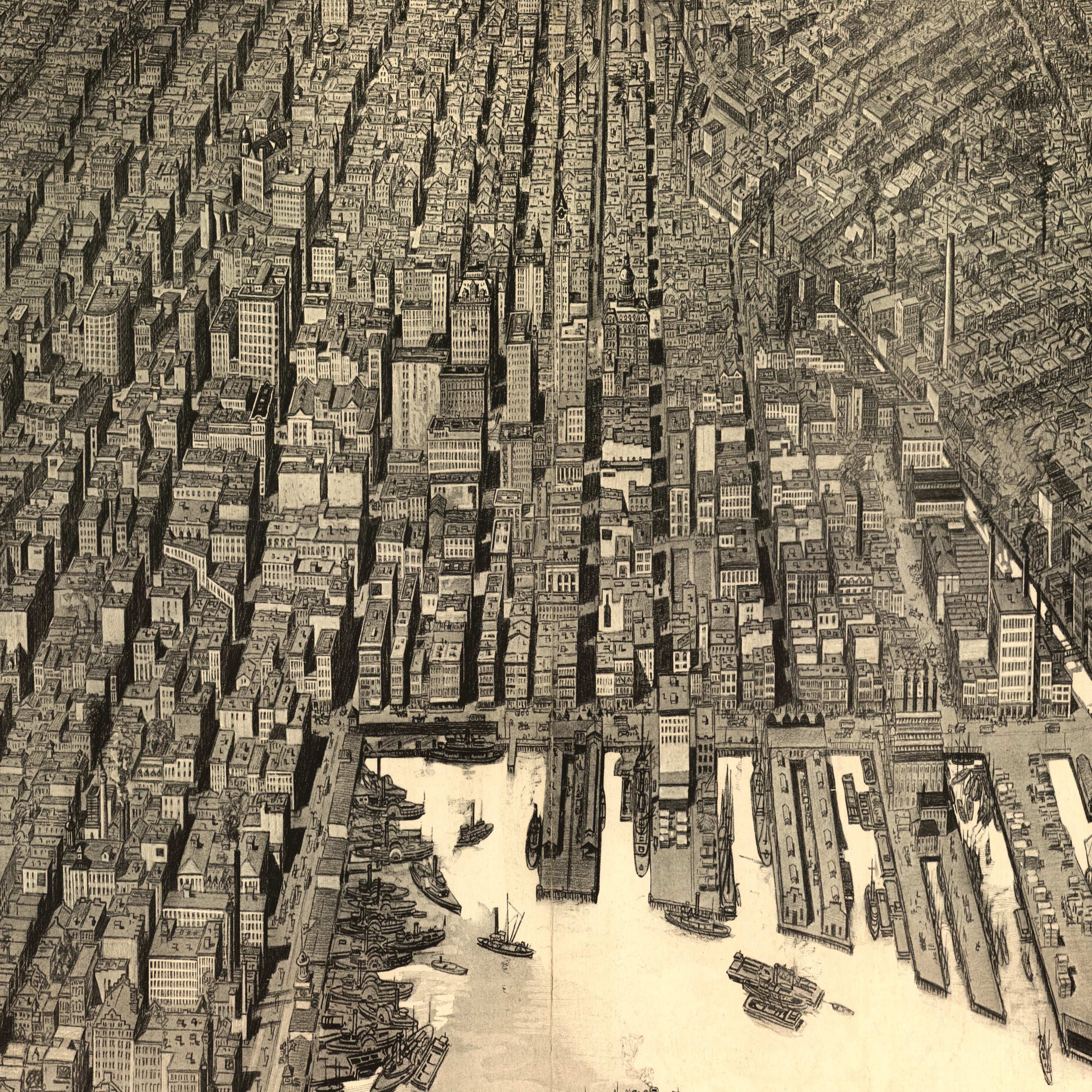
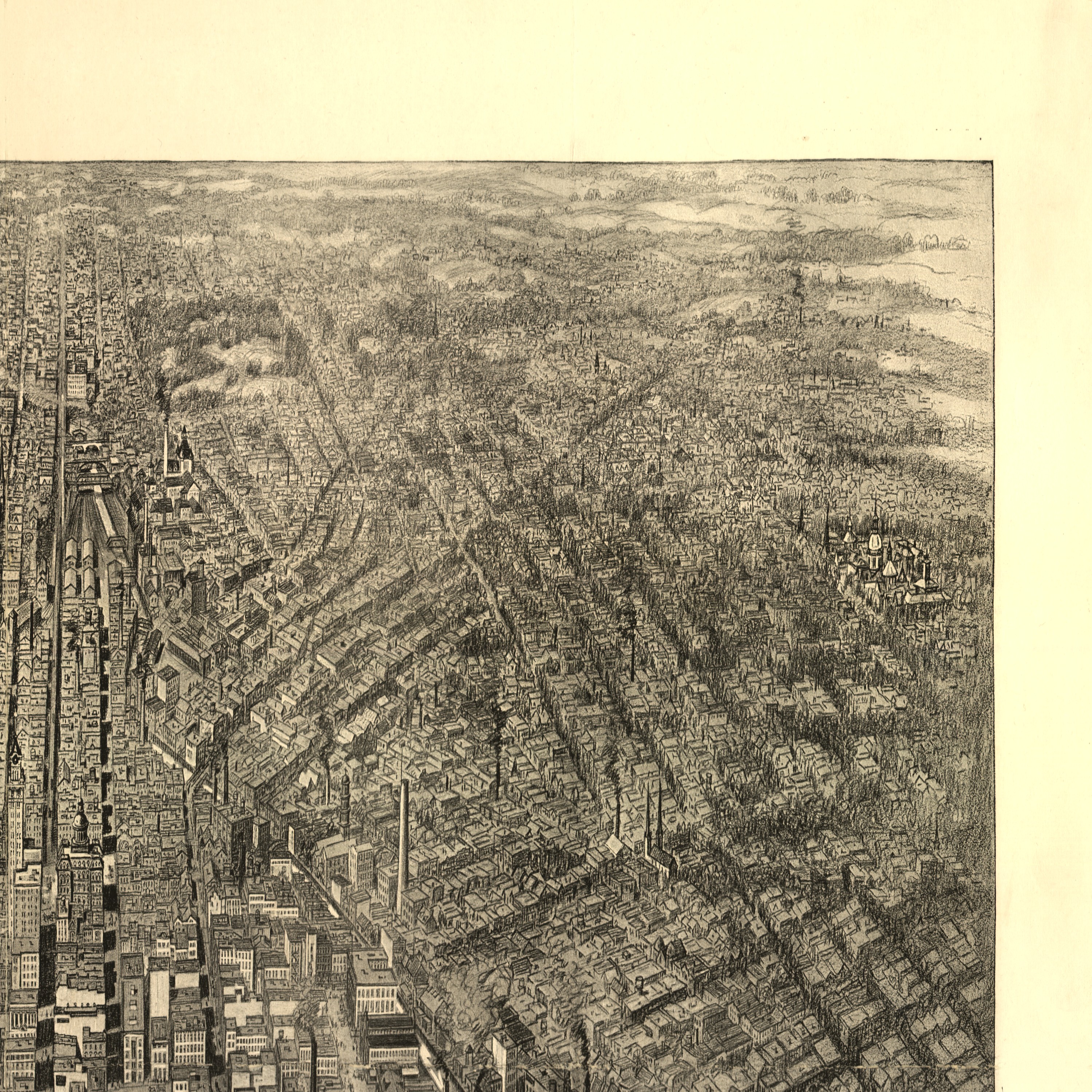
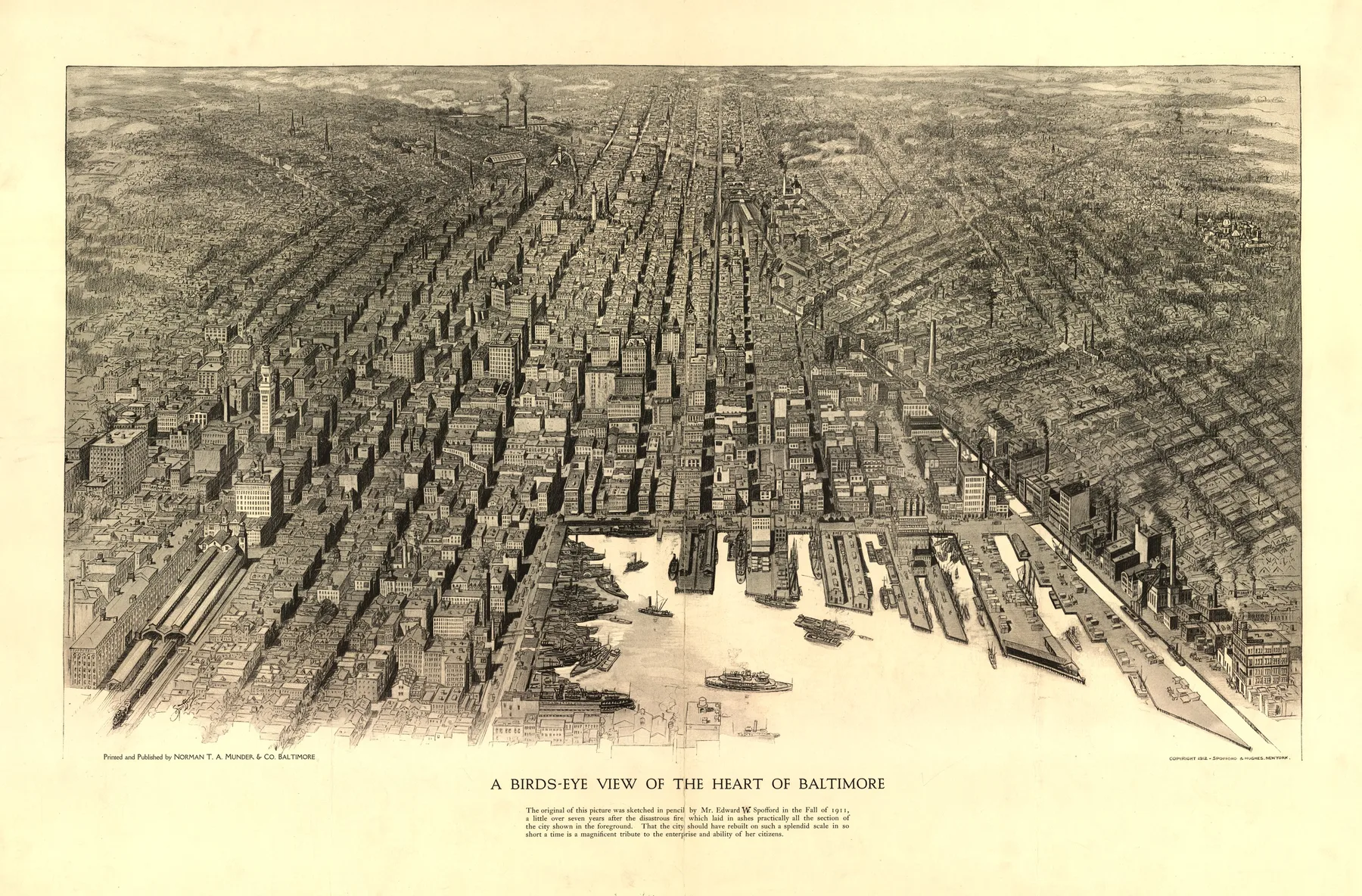
Edward Spofford drew this view in the autumn of 1911, working up pencil sketches on the ground before his firm Spofford & Hughes produced the 1912 print. He framed the view from the northwest, looking out over the rebuilt downtown toward the Patapsco, and the choice matters. The widened streets of the former Burnt District are legible from above, deliberate and regular in a way the original grid never was. The Locust Point piers sit at the lower right edge of the composition, barely in frame. Spofford included them, but the city he was commissioned to document was the rebuilt commercial core, not the waterfront where the immigrant ships landed.
The immigrants arriving at Locust Point in 1912 had two more years before the pier stopped receiving them. By 1914 the operation closed. The city in Spofford’s view was already, in that summer, becoming the one that would close that door.
Themes
On the sheet
- Locust Point piers
- Patapsco River
- Rebuilt downtown commercial district
- Inner Harbor