Historic Map Print Size Guide
How to size a dense panoramic city map, from smaller rooms and shelves to larger statement walls.
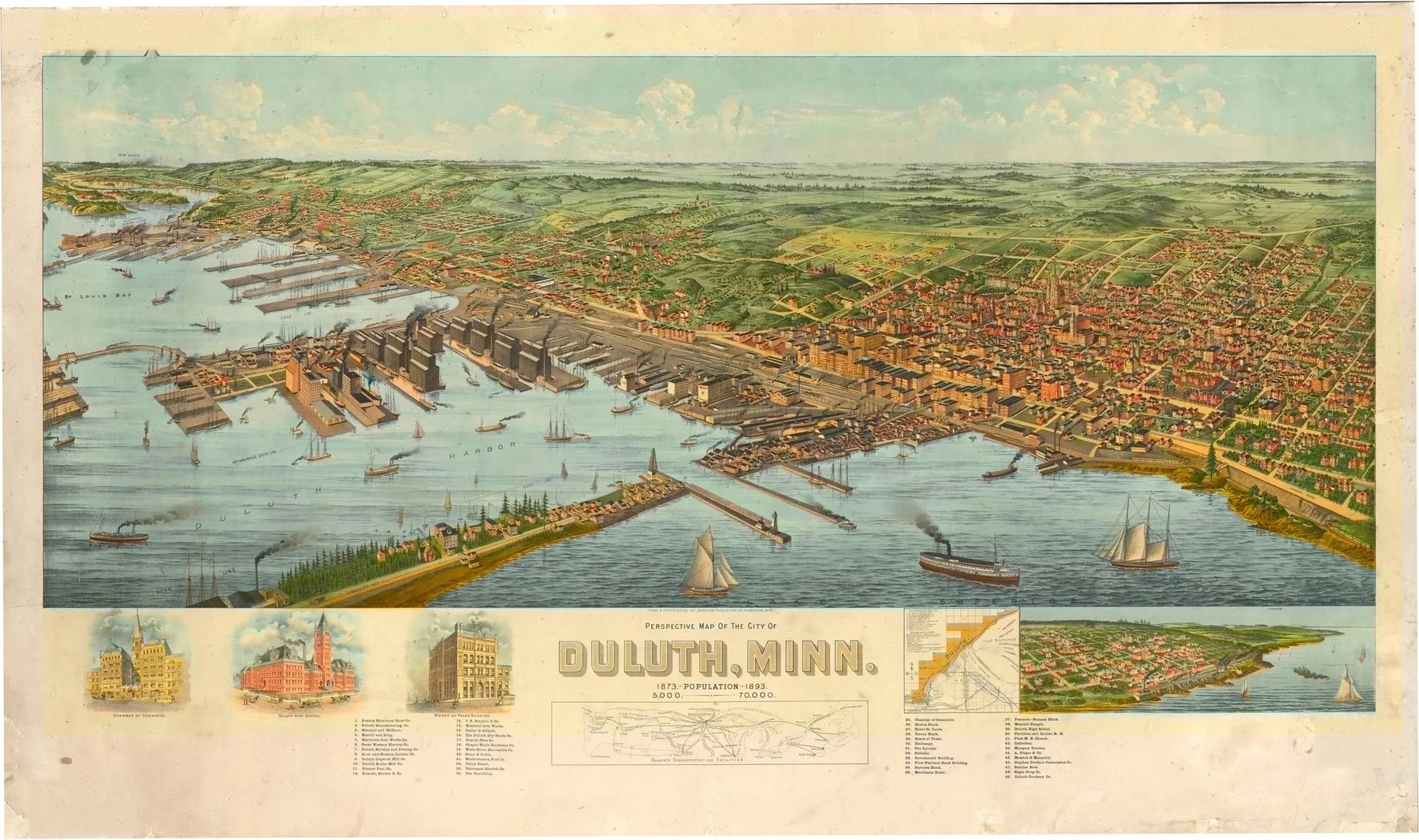
The most useful rule for sizing a panoramic map is plain: the denser the sheet, the more it rewards space. These prints hold two experiences at once. From across the room you get skyline, waterline, and overall structure. Up close you get roofs, piers, church spires, mills, labels, and the small acts of civic display that make panoramic maps stay with you. Size decides how much of that second experience survives.
A smaller format works when the goal is atmosphere first. In a hallway, study, reading corner, or office, a compact print can still carry the silhouette of a harbor city or the steep rise of a mining town without asking the room to reorganize itself. If the place matters more than the linework, a smaller print can be enough.
Medium and larger formats make more sense when the print is meant to be read as well as seen. That is true for sheets such as Boston, Baltimore, or Duluth, where the interest is spread across terminals, basins, rail yards, and tight commercial blocks rather than one landmark. At that scale, the wall becomes an invitation to spend time with the city.
It also helps to think in viewing distance rather than abstract size labels. If the map will be seen from a sofa, bed, or desk across the room, composition can lead. If people will stand close to it in a corridor, landing, or studio, detail becomes the reason to size up. A print that looks strong at first glance but never rewards a second look is often too small for the sheet it carries.
The cleanest way to choose is to compare a few city pages and imagine how much of each one you would want to read from a normal distance. Start with the archive browse, then use the companion guide on print format once the wall size feels settled.
Sources and next paths
Boston 1905
A dense waterfront sheet where size changes how much of the city you can read.
CityBaltimore 1912
A strong example of a print that holds both broad composition and fine industrial detail.
GuideCompare print formats
Once size is clearer, the next decision is which material carries the map best in the room.